Strategic waste management advisory and regulatory guidance for waste operators, developers, and investors across the UK.
Expert Waste Management Advice
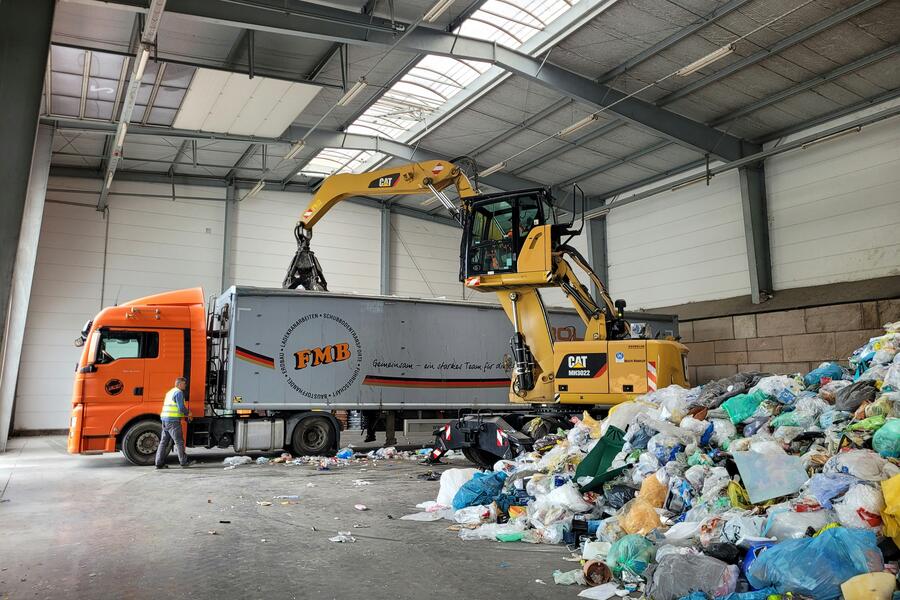
Waste management facilities — from materials recovery facilities and transfer stations through to landfill and energy recovery installations — are subject to a complex and evolving regulatory framework. Environmental Permits, exemption registrations, and ongoing regulatory compliance all require specialist expertise to navigate effectively.
Expert, independent consultancy advice is available for all project types, covering the full regulatory lifecycle from initial site identification and feasibility assessment through to Environmental Permit and operational compliance.
What We Advise On
Waste site identification, assessment, and feasibility
Waste needs assessment and capacity gap analysis
Environmental Impact Assessment coordination for waste developments
Environmental Permit applications and variations
Waste exemption registration and compliance
Regulatory due diligence for waste site acquisitions
Waste hierarchy compliance and reporting
Operational compliance monitoring and advisory support
The Waste Regulatory Framework
Waste management facilities in England require Environmental Permits from the Environment Agency (in Wales, from Natural Resources Wales). The permitting process governs what wastes can be accepted, how they must be managed, and the environmental standards the facility must meet. Many lower-risk operations qualify for registration under one of the standard rules permit categories, which simplifies the permitting process considerably.
In addition to Environmental Permits, waste management operations are subject to the Waste (England and Wales) Regulations, which give effect to the waste hierarchy and impose producer responsibility obligations on waste producers and managers. Specialist advice is available on meeting these obligations across all waste streams.
Key Waste Management Sectors
Materials Recovery Facilities
Regulatory and Environmental Permit advice for sorting and processing facilities handling dry recycling and commingled materials.
Waste Transfer Stations
Site selection, feasibility, and Environmental Permit advice for waste transfer and bulking operations.
Inert Waste Disposal
Regulatory and permit support for inert waste disposal operations, including beneficial use for quarry restoration purposes.
Organic Waste Processing
Advice on Environmental Permit requirements for anaerobic digestion, composting, and in-vessel treatment facilities.
Waste on Mineral Sites
Many mineral extraction operations use imported inert waste materials for restoration purposes. This intersection of minerals and waste management creates particular opportunities — and risks — for both mineral owners and waste operators. Specialist advice is available on the regulatory requirements for waste use in quarry restoration, including Environmental Permit requirements for accepting, handling, and using waste materials on mineral sites.
Frequently Asked Questions
An Environmental Permit is a legal authorisation issued by the Environment Agency (in England) or Natural Resources Wales that sets out the conditions under which a waste management facility may operate. The permit specifies what waste types can be accepted, the quantities involved, how the waste must be stored and managed, and the monitoring and reporting requirements. Operating a regulated waste facility without a permit, or in breach of permit conditions, is a criminal offence.
A standard rules permit is a pre-determined set of permit conditions published by the Environment Agency for common waste activities. If a proposed operation meets all the standard rules criteria, the application process is significantly simplified and faster than a bespoke permit. A bespoke permit is required where the standard rules do not apply — for example, for novel activities, larger-scale operations, or facilities with site-specific environmental considerations. Bespoke permits require a detailed technical assessment and typically take significantly longer to obtain.
The waste hierarchy is the priority order for waste management that underpins UK waste policy: Prevention (the most preferred option), followed by Preparing for Reuse, then Recycling, then Other Recovery (including energy recovery), and finally Disposal (the least preferred option). Waste producers and managers are legally required to apply the waste hierarchy and take all reasonable steps to deal with waste in accordance with its priorities.
Most activities involving the recovery or disposal of controlled waste require an Environmental Permit. This includes landfill and inert waste disposal, materials recovery facilities, waste transfer stations, composting and anaerobic digestion plants, metal recycling facilities, incinerators and energy-from-waste plants, and waste treatment operations. Some lower-risk activities may qualify for an exemption registration rather than a full permit. Exempt activities must still be registered with the Environment Agency.
The Environment Agency has a statutory target of 4 months to determine a standard rules permit application and 7 months for a bespoke permit application, from receipt of a duly made application. In practice, complex applications often take longer. Pre-application discussions with the Environment Agency are strongly recommended for bespoke applications, as they can identify potential issues early and reduce the risk of delays during the formal process.
Any person or business that transports controlled waste in the course of their business must register as a waste carrier with the Environment Agency. There are two tiers: upper tier (for businesses whose main activity is transporting waste, such as haulage contractors) and lower tier (for businesses that transport waste as a necessary consequence of their main business, such as builders who transport skip waste). Transporting waste without a valid waste carrier registration is a criminal offence.
The Environmental Protection Act 1990 imposes a duty of care on everyone who produces, imports, keeps, stores, transports, treats, or disposes of controlled waste. This duty requires waste to be managed safely, to be transferred only to an authorised person (a licensed carrier or registered exemption holder), to be accompanied by an accurate written description of the waste, and to be disposed of at an appropriately authorised facility. Written waste transfer notes must be retained for at least 2 years.
Producer responsibility legislation places obligations on businesses that manufacture, import, or sell certain products to fund and manage the end-of-life treatment or recycling of those products. In the UK, producer responsibility schemes cover packaging waste, electrical and electronic equipment (WEEE), batteries, tyres, and end-of-life vehicles. Businesses above the relevant threshold must register with an approved compliance scheme and meet annual recovery and recycling obligations.
Yes. An Environmental Permit can be varied at any time — either at the request of the permit holder or initiated by the Environment Agency where a change in operating conditions or new environmental standards require it. Permits can also be surrendered when a facility ceases to operate, subject to the permit holder demonstrating that the land has been left in a satisfactory condition. The surrender process can be complex, particularly for sites with a history of contamination.
Make an Enquiry
To discuss your minerals or waste requirements, please get in touch.