
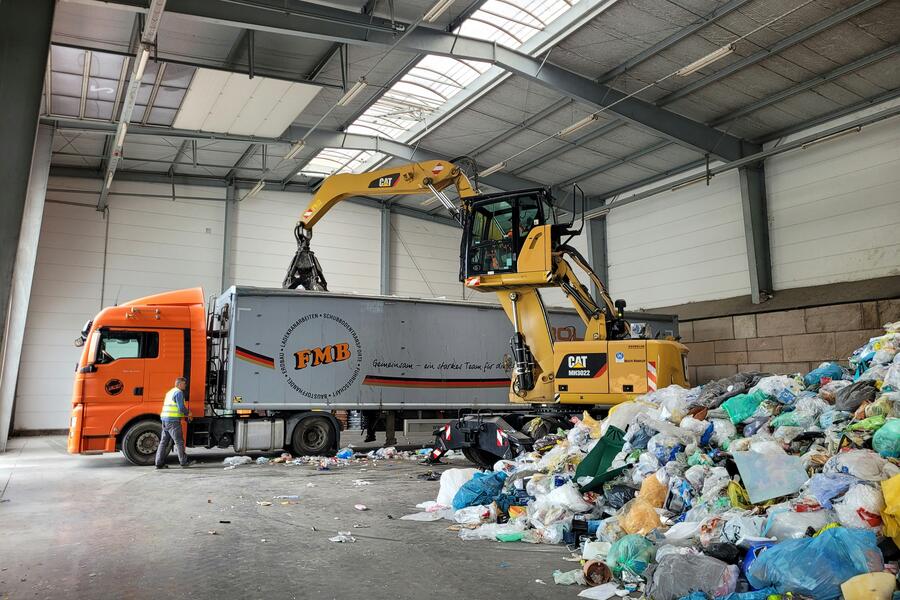
Waste management is one of the most heavily regulated sectors in the UK economy. Anyone seeking to develop or operate a waste management facility must navigate a complex web of planning regulations, environmental permitting requirements, and strategic policy obligations that govern where and how waste can be managed. This guide provides an introduction to the waste planning regulatory framework in England.
The Dual Regulatory System: Planning and Permitting
A waste management facility typically requires both planning permission and an Environmental Permit — two separate regulatory authorisations from two different authorities. This dual system can cause confusion for those unfamiliar with waste regulation.
- Planning permission is granted by the Waste Planning Authority (in most of England, the county council) under the Town and Country Planning Act 1990 and associated regulations. Planning permission controls the principle of the development, its design, its relationship with the surrounding land use and landscape, and the traffic and amenity impacts of its operation.
- The Environmental Permit is granted by the Environment Agency (in England) under the Environmental Permitting (England and Wales) Regulations 2016. The Environmental Permit controls the environmental management of the waste facility — the types and quantities of waste that can be accepted, the measures to control emissions to air, water, and land, the monitoring requirements, and the site management obligations.
The two authorisations are separate and must be applied for separately, but they are linked in important ways. A waste facility cannot operate without both, and conditions in the Environmental Permit may affect the design requirements addressed in the planning application. Coordinating the two processes requires careful planning and specialist expertise.
Waste Planning Authorities and the Waste Local Plan
Waste Planning Authorities (WPAs) are responsible for preparing the Waste Local Plan — the development plan document that sets out the strategic context and development management policies for waste management facilities within their area. The Waste Local Plan typically covers a plan period of at least 15 years and must demonstrate that sufficient waste management capacity will be available to manage the waste arisings projected over the plan period.
Waste Local Plans allocate sites for new waste management facilities, identify areas of search for different types of facility, and set out the policies against which planning applications will be assessed. Early engagement with the Waste Local Plan preparation process — through representations at the consultation stages — is one of the most effective ways of securing a favourable planning policy framework for waste management proposals.
The Waste Hierarchy
The waste hierarchy is the cornerstone of UK and EU waste policy. It sets out the priority order for waste management, from the most preferred option (prevention) to the least preferred (disposal):
- Prevention — avoiding the creation of waste in the first place
- Preparing for Reuse — checking, cleaning, repairing, or refurbishing waste items for reuse without further processing
- Recycling — reprocessing waste into materials for use (which may be for a different purpose than the original use)
- Other Recovery — including energy recovery through combustion, gasification, pyrolysis, or anaerobic digestion
- Disposal — including landfill and incineration without energy recovery — the least preferred option
Waste planning policy in England requires applicants to demonstrate that their proposals are consistent with the waste hierarchy, and that they support the movement of waste management up the hierarchy. A proposal for a new landfill, for example, must demonstrate that there is a genuine need for disposal capacity that cannot reasonably be met through higher options in the hierarchy.
National Planning Policy for Waste
The National Planning Policy for Waste (NPPW) is the key national planning policy document for waste in England. It sets out the Government's vision for waste management, including the need to move waste up the hierarchy, the importance of the net self-sufficiency principle (managing waste as close to where it arises as possible), and the need to assess waste management proposals on the basis of their contribution to sustainable development.
Types of Waste Facility Requiring Planning Permission
- Materials Recovery Facilities (MRFs) for the sorting of dry recyclable waste
- Waste Transfer Stations for the bulking and onward transportation of mixed waste
- Composting and Anaerobic Digestion facilities for organic waste treatment
- Energy from Waste facilities (incineration with energy recovery)
- Landfill sites for the disposal of non-hazardous and hazardous waste
- Inert waste landfill sites (including quarry restoration using inert waste)
- Hazardous waste treatment facilities
- Construction and Demolition Waste recycling facilities
- Civic Amenity Sites (Household Waste Recycling Centres)
Environmental Permits for Waste
Most waste management facilities require an Environmental Permit from the Environment Agency. The permit conditions will specify the types of waste that can be accepted (by European Waste Catalogue code), the maximum quantities that can be stored and processed, the emission standards that must be met (for noise, dust, odour, and discharges to controlled waters), the monitoring and reporting requirements, and the financial provision required to meet decommissioning and restoration costs at the end of the facility's operational life.
Some lower-risk waste activities may be eligible for registration under an Exemption rather than a full Environmental Permit. Exemptions are free to register and have lighter regulatory requirements, but they are subject to strict limits on the types and quantities of waste that can be managed.
Waste Planning and Mineral Restoration
A particular interface between waste planning and minerals planning arises where inert waste materials are used to restore quarries. Many quarries are restored using imported inert waste — construction and demolition waste, soils, and similar materials — which fills the void created by mineral extraction. This operation involves the acceptance and use of controlled waste, which requires both planning consent and an Environmental Permit (or appropriate Exemption registration).
The planning and permitting implications of quarry restoration using waste can be complex, and specialist advice is advisable before entering into agreements to accept inert waste for restoration purposes.
How We Can Help
Mineral Management provides specialist waste management consultancy services to waste operators, developers, and landowners across England, Wales, and Scotland. We advise on the planning strategy for new waste facilities, preparation of waste planning applications, engagement with Waste Local Plan processes, and the interaction between waste management and mineral planning consents.